AI Chip IPO Wave Threatens to Pull More Capital From Crypto

Two major semiconductor listings from SK Hynix and CXMT are set to test investor appetite for AI infrastructure. CoinDesk reports that the deals could deepen a market rotation that has already left crypto competing for attention and liquidity.

AI Chip IPO Wave Threatens to Pull More Capital From Crypto

What happened?

Two major semiconductor listings from SK Hynix and CXMT are set to test investor appetite for AI infrastructure. CoinDesk reports that the deals could deepen a market rotation that has already left crypto competing for attention and liquidity.

Why it matters

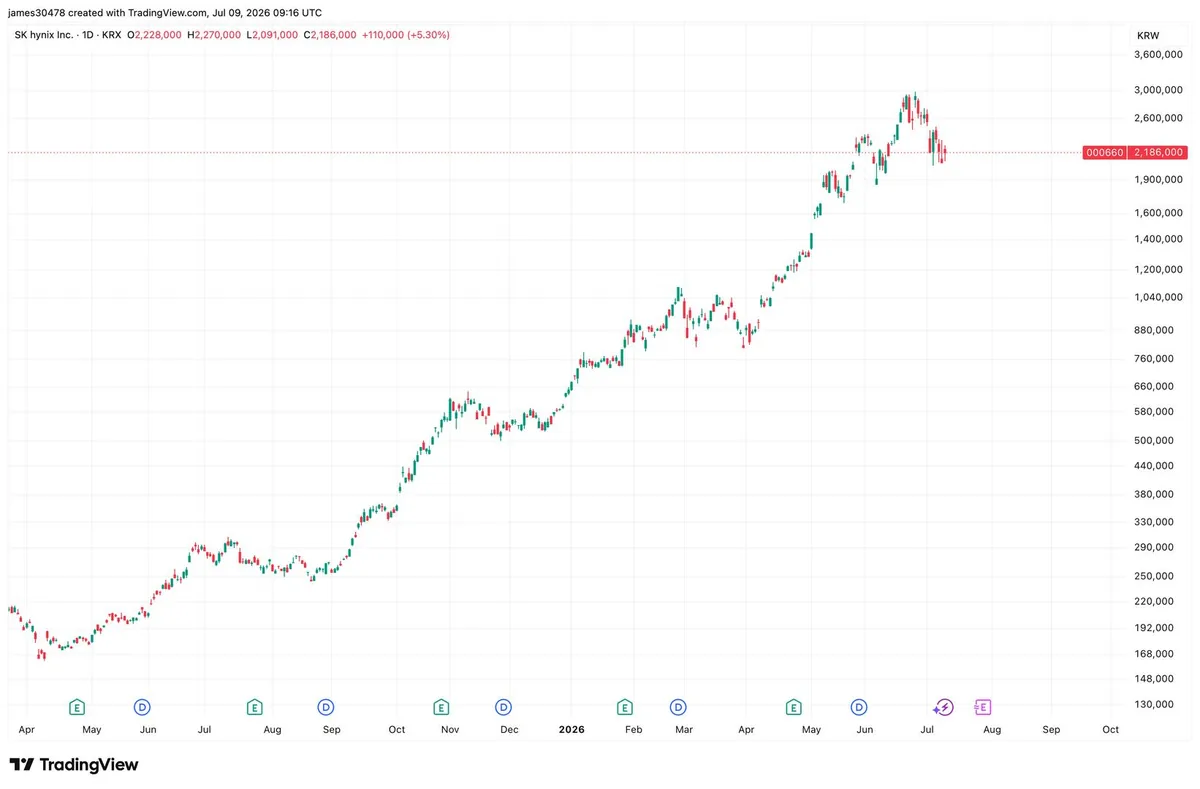
A pair of large AI-linked semiconductor IPOs is moving toward market, with SK Hynix preparing a U.S. listing and China’s Changxin Memory Technologies, or CXMT, planning a Shanghai offering. According to CoinDesk, SK Hynix is aiming to raise about $24.5 billion to $28 billion through the sale of 177.9 million American depositary receipts, while CXMT is set to begin book building on July 15 for a 29.5 billion yuan, or $4.3 billion, IPO.

A pair of large AI-linked semiconductor IPOs is moving toward market, with SK Hynix preparing a U.S. listing and China’s Changxin Memory Technologies, or CXMT, planning a Shanghai offering. According to CoinDesk, SK Hynix is aiming to raise about $24.5 billion to $28 billion through the sale of 177.9 million American depositary receipts, while CXMT is set to begin book building on July 15 for a 29.5 billion yuan, or $4.3 billion, IPO.

The listings matter because they show how aggressively global capital is still chasing the infrastructure behind artificial intelligence. CoinDesk reported that SK Hynix’s deal has been more than seven times oversubscribed and has drawn interest from long-only funds, sovereign wealth funds and specialist technology investors.

For crypto markets, the concern is competition for liquidity. CoinDesk framed the upcoming deals as part of a broader rotation in which investors are allocating fresh capital to AI infrastructure companies rather than digital assets. That shift comes as bitcoin has fallen roughly 50% from its October all-time high to around $63,000, according to the report.

The companies also highlight the scale of spending required to meet AI demand. SK Hynix plans to use proceeds for new manufacturing capacity and advanced chipmaking equipment, while CXMT intends to upgrade production lines and technology. Reuters estimates cited by CoinDesk put CXMT’s share of the global DRAM market at around 7.7% last year.

The IPO pipeline could extend beyond these chip names. CoinDesk noted that OpenAI and Anthropic have been discussed as companies that could eventually command valuations approaching $1 trillion, although concerns about AI valuations and cooling semiconductor shares may delay potential listings until 2027. Even with that timing uncertainty, another wave of AI offerings would likely keep crypto competing with one of the market’s dominant investment themes.

Source: CoinDesk

Keep exploring

Related stories

Sony Bank Gets Conditional U.S. Approval for Stablecoin Trust Bank

Sony Bank Gets Conditional U.S. Approval for Stablecoin Trust Bank

Sony Bank has received conditional OCC approval to form a New York-based national trust bank for its planned U.S. dollar stablecoin business. The unit, Connectia Trust, will not begin operations or issue stablecoins until all required approvals are secured.

Read
Crypto Trader Holds $1.14M EUR/USD Long on Ostium for 400 Days

Crypto Trader Holds $1.14M EUR/USD Long on Ostium for 400 Days

A trader on decentralized exchange Ostium has kept a $1.14 million bullish EUR/USD perpetual futures position open for 400 days. The trade applies crypto’s long-term “HODL” mindset to a major forex pair, while highlighting how small on-chain FX remains beside the global currency market.

Read
Bitcoin ETFs See New $85M Outflow After $2.7B Sell-Off Streak Ends

Bitcoin ETFs See New $85M Outflow After $2.7B Sell-Off Streak Ends

US spot Bitcoin ETFs recorded another net outflow on Wednesday, even as analysis cited by Cointelegraph said the sector’s largest outflow streak had ended. The data points to continued caution rather than a clear rebound in demand.

Read