Bitcoin Falls Below Rainbow Chart Floor Into 'BTC Is Dead' Zone

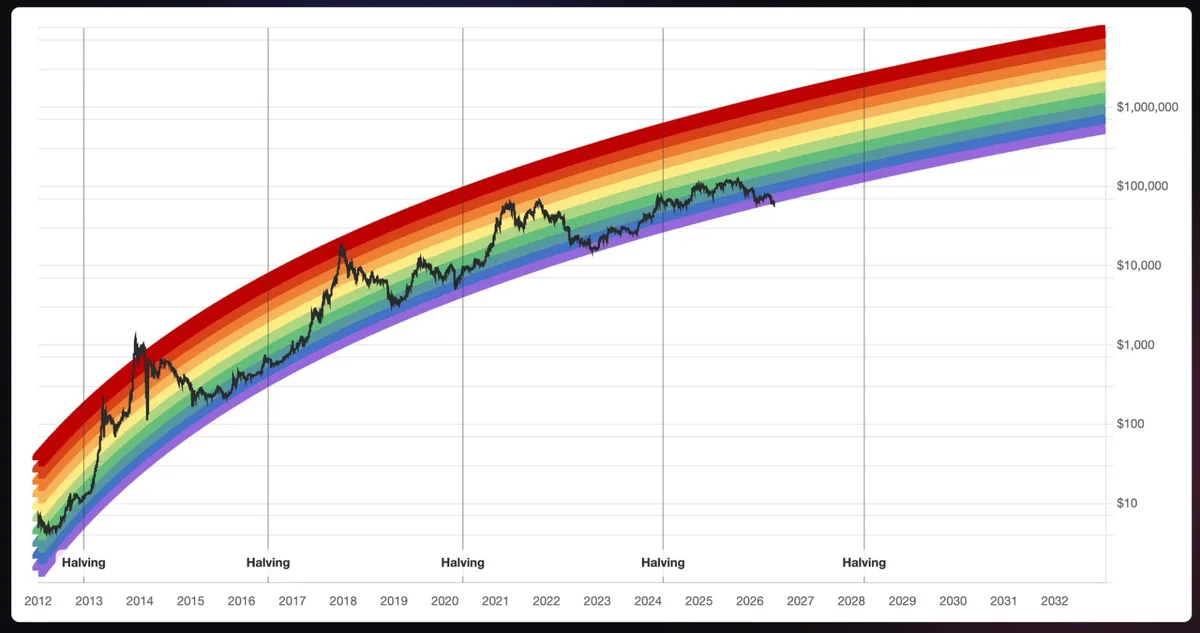
Bitcoin has moved below the lower boundary of the well-known Bitcoin Rainbow Chart, entering the area labeled the 'BTC is dead' zone. The move is notable because the chart is widely watched as a sentiment and valuation reference point, though it should not be treated as investment advice.

Bitcoin Falls Below Rainbow Chart Floor Into 'BTC Is Dead' Zone

What happened?

Bitcoin has moved below the lower boundary of the well-known Bitcoin Rainbow Chart, entering the area labeled the 'BTC is dead' zone. The move is notable because the chart is widely watched as a sentiment and valuation reference point, though it should not be treated as investment advice.

Why it matters

Bitcoin has broken below the floor of its famous Rainbow Chart and entered the section labeled the 'BTC is dead' zone, according to CoinDesk. The move places BTC outside the lower band of a popular long-term market visualization followed by some crypto traders and observers.

Bitcoin has broken below the floor of its famous Rainbow Chart and entered the section labeled the 'BTC is dead' zone, according to CoinDesk. The move places BTC outside the lower band of a popular long-term market visualization followed by some crypto traders and observers.

The development matters because the Rainbow Chart is commonly used as a simplified way to frame Bitcoin's price against historical market sentiment. A break below its lower boundary can draw attention from readers watching whether market confidence is weakening or whether the chart's framing is being challenged by current conditions.

The chart's label, 'BTC is dead,' is a dramatic shorthand rather than a literal conclusion about Bitcoin's status. It reflects an extreme zone on the model, not a verified statement that Bitcoin or its network has failed.

For the broader crypto market, the breach is mainly a sentiment signal. It may influence discussion among traders, analysts, and crypto-native companies that monitor Bitcoin as the sector's benchmark asset, but the source does not establish a direct causal effect from the chart move to market behavior.

As with any single market indicator, the Rainbow Chart offers context rather than certainty. Readers should treat the move as one data point in the wider Bitcoin market narrative, not as a standalone basis for financial decisions.

Source: CoinDesk

Keep exploring

Related stories

Senate Keeps CLARITY Act Moving as Crypto Vote Is Set for September

Senate Keeps CLARITY Act Moving as Crypto Vote Is Set for September

Senate Majority Leader John Thune filed a motion to proceed early Saturday, keeping the CLARITY Act on track for a mid-September vote. The move sets up another key moment for the bill as lawmakers continue working through crypto legislation.

Read
U.S. Senate Begins First Round of Voting on Crypto Clarity Act

U.S. Senate Begins First Round of Voting on Crypto Clarity Act

The U.S. Senate has opened the first stage of voting on the Crypto Clarity Act, moving the bill one step closer to potential consideration next month. The vote marks an early procedural development in the legislative process.

Read
IMF says domestic stablecoins could increase demand for dollar-backed tokens

IMF says domestic stablecoins could increase demand for dollar-backed tokens

IMF first deputy managing director Dan Katz said users may prefer digital dollars because of their liquidity, network effects and cross-border acceptance. The comments suggest local stablecoin projects could still reinforce demand for dollar-linked tokens.

Read