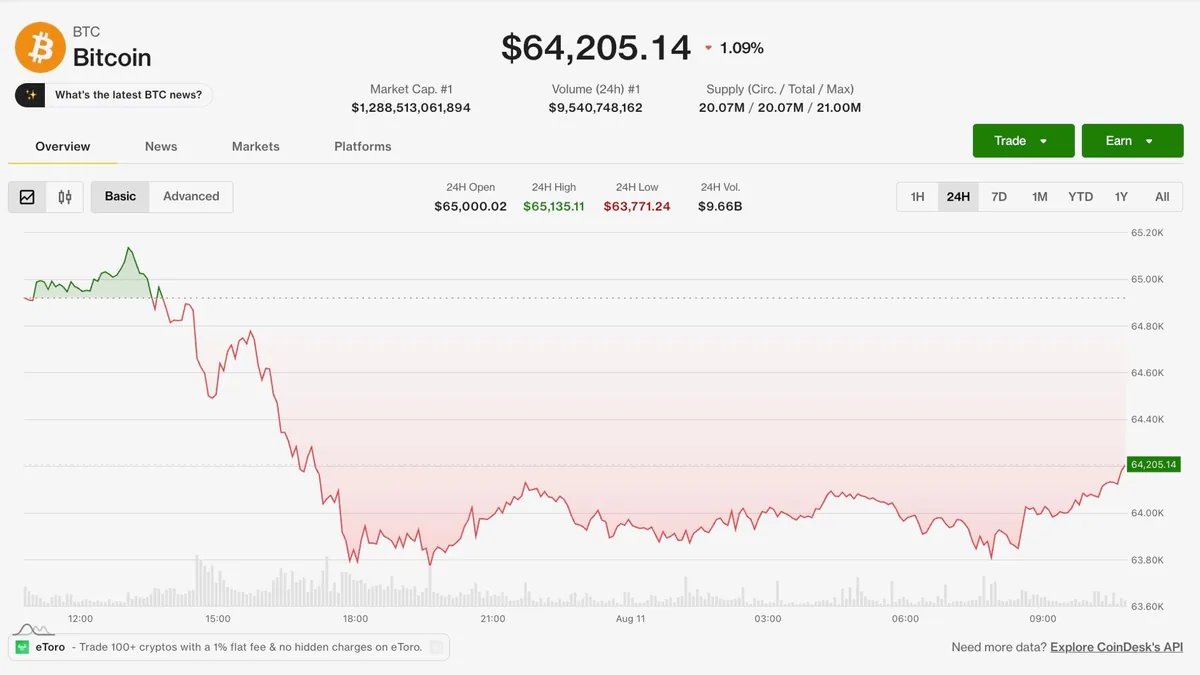
Bitcoin stayed below $65,000 on Tuesday after an overnight sell-off left the broader crypto market little changed. CoinDesk reported that short-lived optimism around a potential Strait of Hormuz deal faded after President Donald Trump demanded 50 years of compensation from Iran as a condition for negotiations, helping push Brent crude to $89.08. Bitcoin was down 1.68% over 24 hours, while ether was 2.4% lower on the day.
The move matters because crypto markets are again trading around macro pressure points rather than a single digital-asset catalyst. Higher oil prices can feed inflation concerns, and U.S. equity futures were also flat as traders looked ahead to Wednesday’s CPI report. A hotter inflation reading could strengthen expectations that interest rates stay higher for longer, a backdrop that often weighs on risk assets.
Strategy added another source of pressure after selling a further 1,690 BTC on Monday, according to the report. It marked the company’s fourth consecutive weekly reduction, and CoinDesk said Strategy has not bought bitcoin since June. For a market that closely tracks large corporate bitcoin holders, continued selling can affect sentiment even when broader spot prices are only modestly changed.
Derivatives activity showed heavy trading but limited new directional conviction. Crypto futures volume rose 51% to $143.15 billion over 24 hours, while total open interest stayed near $115.6 billion. The long-short taker volume ratio returned to neutral, suggesting neither bulls nor bears had a clear dominance in aggregate futures flow.
XRP was among the weaker spots in the market, with futures open interest rising 14% to 2.72 billion tokens, its highest level since October. The token was threatening to fall below $1 for the first time since 2024, while negative 24-hour cumulative volume delta suggested more aggressive selling pressure. Elsewhere, Curve DAO token stood out with a 9.49% gain, while Zcash led losses among the tokens highlighted by CoinDesk.