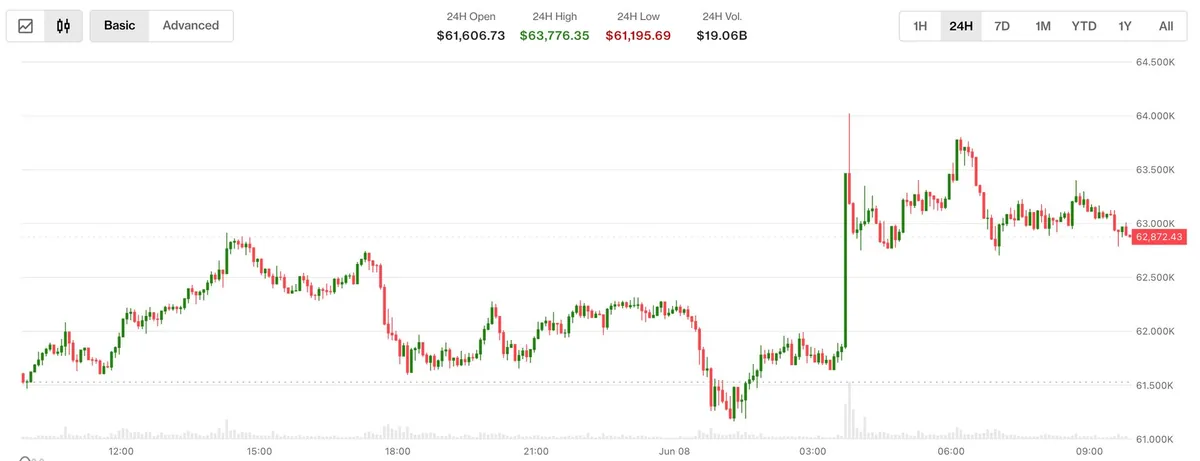
Bitcoin moved back below $63,000 on Monday as renewed military conflict between Iran and Israel weighed on global markets. The largest cryptocurrency traded around $62,900 at 4:00 UTC, according to CoinDesk data, after reaching a late Sunday high of $63,776.
The pullback came as investors reacted to a broader risk-off session. WTI crude oil futures rose more than 3% to $93.50 after Iran and Israel exchanged airstrikes, while Asian equity markets fell sharply. South Korea’s KOSPI dropped more than 6.8%, triggering a temporary trading halt, and Japan’s Nikkei lost more than 3%.
CoinDesk reported that U.S. President Donald Trump called for restraint and said he had asked Israeli Prime Minister Benjamin Netanyahu not to retaliate further. The market reaction, however, reflected concern that higher oil prices could add pressure to U.S. Treasury yields, which had already risen after a strong U.S. jobs report.
Bitcoin was already under pressure before the latest geopolitical flare-up. The asset fell nearly 14% last week and briefly moved below $60,000, with CoinDesk citing several factors including Strategy’s BTC sale, enthusiasm around AI stocks and outflows from spot bitcoin ETFs. Volatility may remain elevated as markets watch geopolitical developments, U.S. inflation data and major IPO activity.