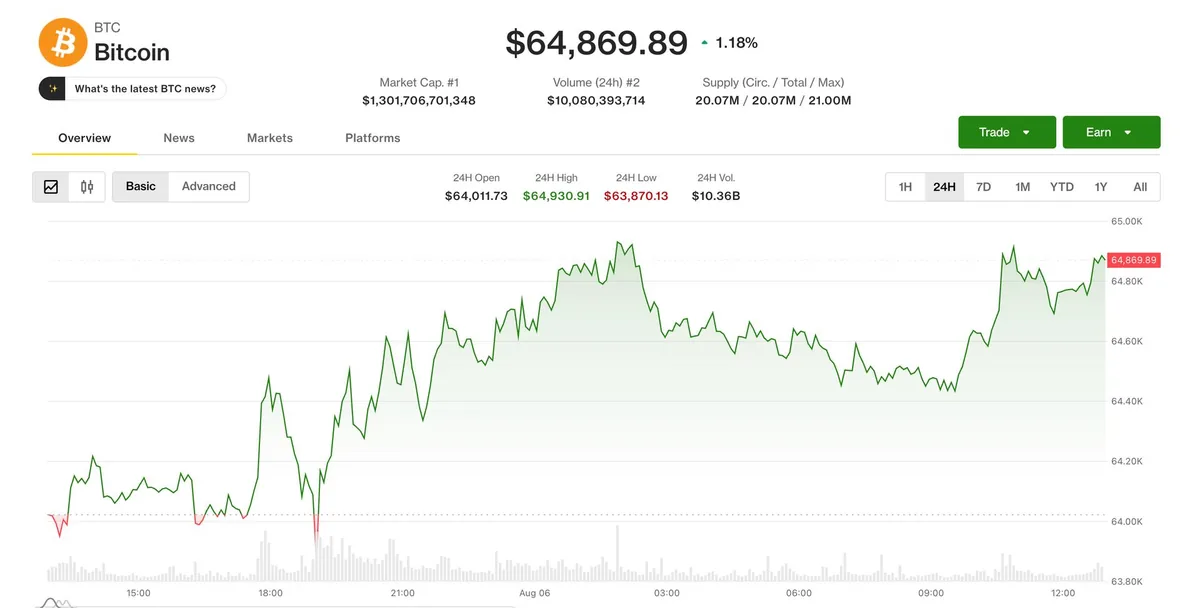
Bitcoin was little changed near $64,000 on Aug. 6, with CoinDesk reporting that the cryptocurrency hovered around $64,830 earlier in the day before continuing to trade in a narrow range. The market focus was less on a crypto-specific breakout and more on whether macro conditions could give risk assets another push.
The setup mattered because traders were watching oil, Treasury yields and the dollar for clues about inflation and Federal Reserve policy. CoinDesk linked the stronger tone in risk sentiment to President Donald Trump’s comments on employment, manufacturing, inflation and the possibility of a deal to reopen the Strait of Hormuz, while noting that bitcoin’s next move still depended on whether lower oil would actually translate into lower yields and a weaker dollar.
Later in the session, oil moved higher after details emerged from a reported Iran-Oman plan for the Strait of Hormuz, with WTI crude cited at $77.70 per barrel, up 3.3% on the day. Two-year Treasury yields also rose, while bitcoin remained around $64,500, underscoring how quickly the macro backdrop could complicate the bullish case.
U.S. labor data was another key input. Initial jobless claims rose by 1,000 to 199,000, below economist forecasts of 202,000, while markets looked ahead to the July nonfarm payrolls report. CoinDesk noted forecasts for 80,000 jobs added in July and an unemployment rate holding at 4.2%.
Crypto-specific developments were mixed. U.S.-listed spot bitcoin ETFs recorded $626 million in net inflows over three days, while select tokens including MemeCore’s M, Pump.fun’s PUMP and Cardano’s ADA outperformed bitcoin over seven days. Mining stocks also drew attention after MARA reported a $611 million second-quarter net loss and CleanSpark missed revenue expectations for its third quarter.