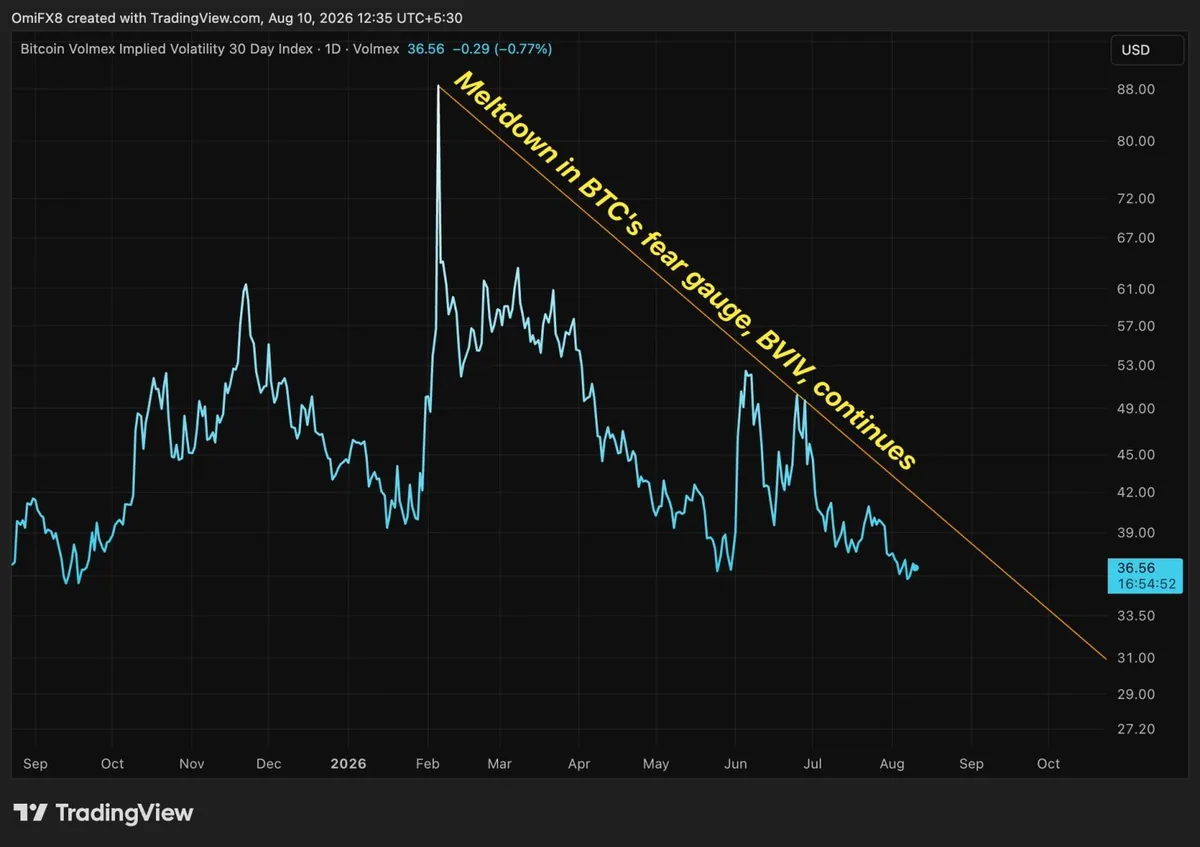
Bitcoin’s options market is pricing in less turbulence. Volmex’s BVIV index, a measure of bitcoin’s annualized 30-day implied volatility, fell to 35.59% over the weekend, its lowest level since September, after bitcoin traded in a narrow range between $62,000 and $66,000 since early July.
The move matters because BVIV functions as a crypto-market version of a fear gauge: when traders rush to hedge against large price swings, implied volatility typically rises. Its decline suggests demand for options linked to big directional moves has weakened, a shift that can affect miners, corporate treasury holders, market makers and leveraged traders using bitcoin derivatives.
FalconX derivatives head Griffin Sears attributed the drop to a broad supply-demand imbalance in the options market. According to the report, demand for directional options has faded while supply has stayed high, partly because market participants including bitcoin miners and corporate treasuries are selling call options through systematic overwriting programs to generate yield on spot BTC holdings.
That extra options supply can suppress implied volatility, especially when the underlying asset is moving less. The article also noted that a midyear lull and a cooler spot market have compressed realized volatility, adding pressure on implied volatility measures such as BVIV.
Still, lower headline volatility does not mean traders are treating bitcoin risk as gone. Put options, which provide protection against price declines, remain more expensive than calls, showing that investors continue to pay a premium for downside insurance even as expectations for a large near-term move have eased.
Himashu Sahay, CTO and co-founder of bitcoin-backed lending platform Arch, warned that low implied volatility can create a false sense of security for BTC borrowers when leverage becomes cheaper. His point was that risk can remain present even when option prices suggest a calmer market, particularly if positions are built without clear downside controls.