
CoinDeskAug 02, 06:50 AM
Strategy Keeps STRC Dividend at 12%
Strategy said it is holding the dividend on its STRC preferred stock at 12%. The decision keeps the payout unchanged for investors in the company’s yield-focused security.
ReadA federal judge in Michigan ruled that sports prediction markets are not likely covered by the Commodity Futures Trading Commission in a case involving Polymarket and state regulators. The decision weakens Polymarket’s position as it challenges Michigan’s enforcement efforts.

A federal judge in Michigan ruled that sports prediction markets are not likely covered by the Commodity Futures Trading Commission in a case involving Polymarket and state regulators. The decision weakens Polymarket’s position as it challenges Michigan’s enforcement efforts.
A federal judge in Michigan has ruled that sports prediction markets are not likely to fall under the Commodity Futures Trading Commission’s purview in a case involving Polymarket and state regulators. The court said Polymarket is not likely to succeed on the merits of its challenge.
A federal judge in Michigan has ruled that sports prediction markets are not likely to fall under the Commodity Futures Trading Commission’s purview in a case involving Polymarket and state regulators. The court said Polymarket is not likely to succeed on the merits of its challenge.
The ruling matters because it addresses how prediction markets may be treated by regulators, a key issue for crypto companies operating in this area. For businesses like Polymarket, the outcome affects how they navigate state oversight and broader questions about which agencies have authority over event-based markets.
Prediction markets have drawn increasing attention as they blend elements of trading, forecasting, and gambling-style contracts. That has made them a regulatory gray area, with companies often facing scrutiny over whether their products should be governed as derivatives, gaming products, or something else entirely.
In this case, the judge’s view suggests Michigan regulators have a stronger position than Polymarket argued in court. While the order does not settle all legal questions around prediction markets, it adds another signal that these products may face different treatment depending on the jurisdiction.
The case is part of a wider debate over how U.S. regulators should handle crypto-adjacent market products that do not fit neatly into existing categories. For firms building in the sector, the decision underscores the importance of state-level rules as well as federal oversight.
Keep exploring

Strategy said it is holding the dividend on its STRC preferred stock at 12%. The decision keeps the payout unchanged for investors in the company’s yield-focused security.
Read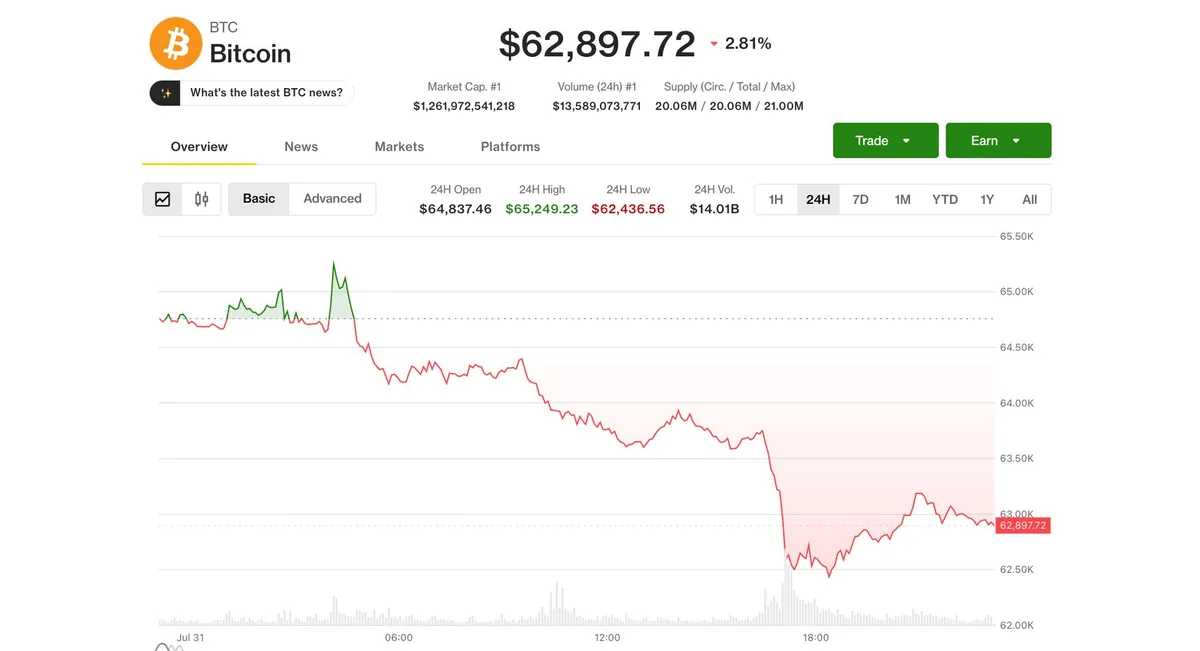
Bitcoin ended July with a monthly gain, though analysts expect August could be more volatile. They said the recent forced-selling pressure that weighed on the market appears to have already run its course.
Read
The latest State of Crypto update says the industry has two weeks left in the push for the Clarity effort. The development keeps attention on U.S. crypto policy as companies and market participants watch for regulatory direction.
Read