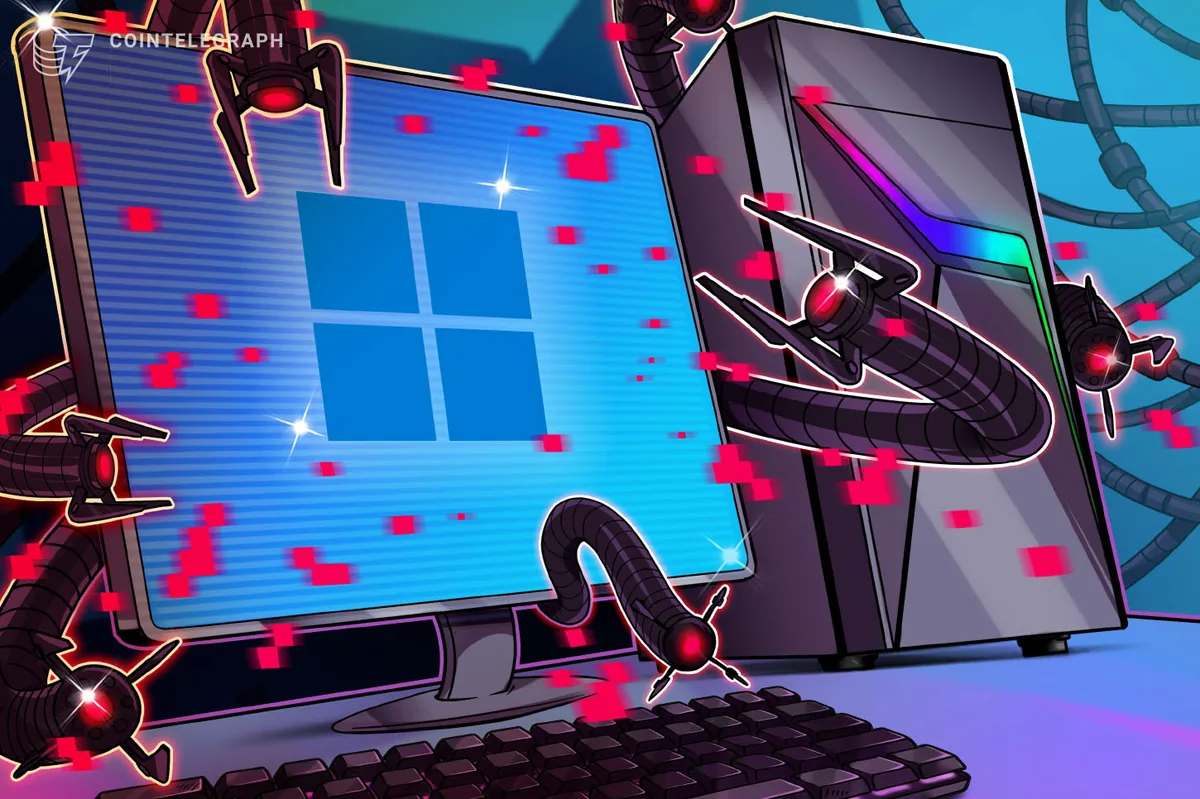
Microsoft has warned Windows users about a crypto-focused “clipper” malware campaign that spreads through USB drives, according to Cointelegraph. The malware is designed to steal data and interfere with cryptocurrency activity, while also enabling remote code execution on affected systems.
The development matters because clipper malware targets a basic weakness in crypto transactions: users often copy and paste wallet addresses. If malware can replace a copied address with one controlled by an attacker, funds may be sent to the wrong destination without the user immediately noticing.
Microsoft said the malware blends data theft with remote code execution, “turning a financially motivated stealer into a lightweight backdoor.” That combination can make infections more serious than a simple clipboard hijacker, as it may allow attackers to maintain broader access to a compromised device.
The use of USB drives also adds a practical risk for individuals and organizations. Removable media can move malware between machines without relying only on downloads, phishing links, or exposed online services.
For crypto users, the warning reinforces the need to verify wallet addresses before sending funds and to treat unfamiliar USB devices as a security risk. The alert also underscores how financially motivated malware continues to adapt around everyday user behavior in digital asset transactions.