Perplexity Wins Appeal Against Amazon in AI Agent Shopping Lawsuit

A U.S. appeals court ruled that Amazon is unlikely to prove Perplexity violated federal hacking law. The decision marks the first appellate ruling on whether AI agents can legally act on users' behalf online.

Perplexity Wins Appeal Against Amazon in AI Agent Shopping Lawsuit

What happened?

A U.S. appeals court ruled that Amazon is unlikely to prove Perplexity violated federal hacking law. The decision marks the first appellate ruling on whether AI agents can legally act on users' behalf online.

Why it matters

Amazon had challenged Perplexity over AI agent shopping, but the appeals court found Amazon was unlikely to succeed on its federal hacking claim. The ruling does not settle every legal issue around AI agents, but it gives the market an early signal on how courts may view user-authorized automation.

A U.S. appeals court ruled that Amazon is unlikely to prove Perplexity violated federal hacking law in a lawsuit over AI agent shopping activity. The decision gives Perplexity an appellate win in a case testing how far automated AI tools can go when acting for users online.

The ruling matters because it addresses a key question for companies building AI agents: whether software that carries out user-directed tasks on websites can trigger liability under federal hacking law. According to the source material, it is the first appellate decision on whether AI agents can legally act on users' behalf online.

Amazon had challenged Perplexity over AI agent shopping, but the appeals court found Amazon was unlikely to succeed on its federal hacking claim. The ruling does not settle every legal issue around AI agents, but it gives the market an early signal on how courts may view user-authorized automation.

For readers following the crypto and broader technology sectors, the case is relevant because AI agents are increasingly being discussed as tools for online transactions, data access, and automated user actions. The decision may influence how platforms, developers, and AI companies think about product design and legal risk.

The case also highlights a growing tension between major online platforms and AI services that interact with websites on behalf of users. As agent-based products expand, courts are likely to face more disputes over access, authorization, and the boundary between automation and misuse.


Source: Decrypt

Keep exploring

Related stories

Coldcard Entropy Flaw Raises Fresh Questions About Hardware Wallet Trust

Coldcard Entropy Flaw Raises Fresh Questions About Hardware Wallet Trust

A reported Coldcard entropy flaw has shaken confidence in hardware wallets and renewed scrutiny of how Bitcoin users assess device security. The issue has put brands such as Ledger, Trezor and Foundation back into the broader debate over self-custody risk.

Read
Crypto Whales Add Bitcoin, Ether and XRP During Market Weakness, CryptoQuant Says

Crypto Whales Add Bitcoin, Ether and XRP During Market Weakness, CryptoQuant Says

CryptoQuant said large holders of Bitcoin, Ether and XRP increased their balances during recent market weakness. The firm described the activity as supply absorption that can appear as a bear market moves toward a later stage.

Read
Strategy’s STRC Recovers as Cash Reserve and Bitcoin Stability Support Preferred Stock

Strategy’s STRC Recovers as Cash Reserve and Bitcoin Stability Support Preferred Stock

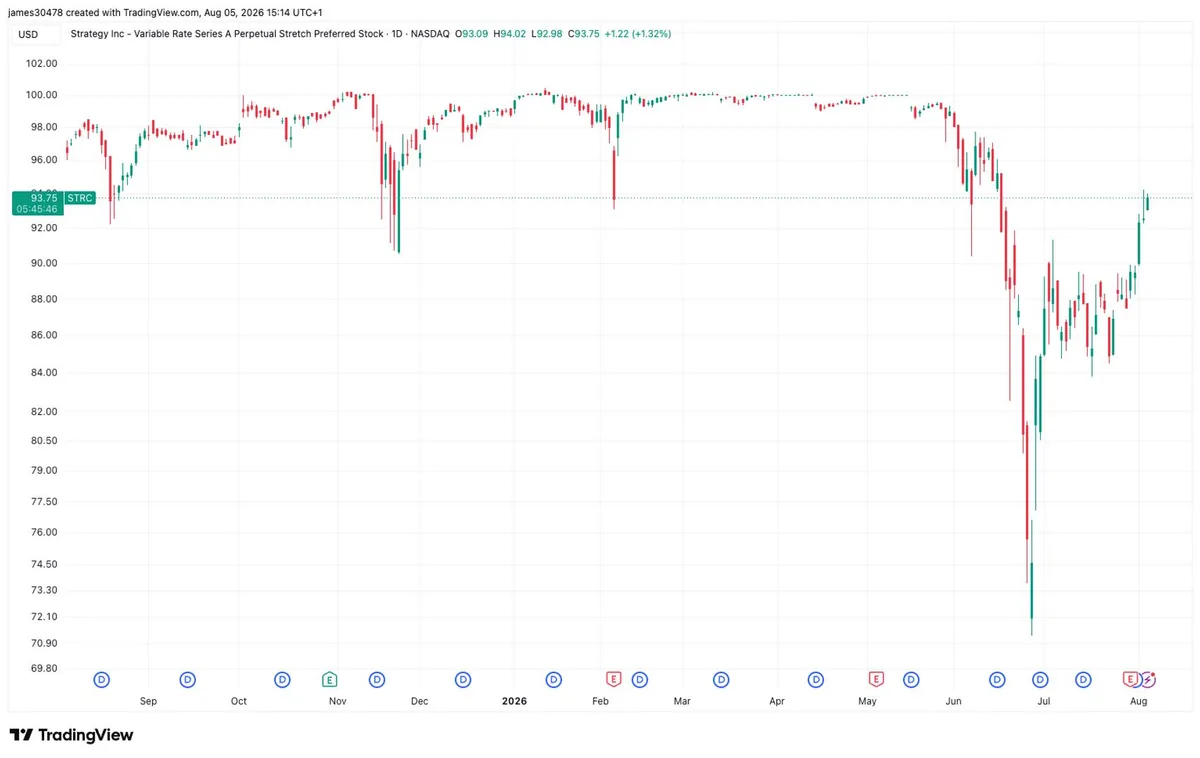
Strategy’s STRC preferred stock has climbed more than 30% from its late-June low, helped by bitcoin sales, buybacks and a larger cash reserve. The rebound comes as bitcoin has stabilized above $60,000 after earlier weakness pressured the security.

Read