US senator seeks ban on elected officials issuing memecoins

Senator Kirsten Gillibrand has proposed a restriction that would bar members of Congress, the US president, and their spouses from issuing or sponsoring their own digital assets. The proposal targets elected officials’ involvement in memecoins and other tokens.

US senator seeks ban on elected officials issuing memecoins

What happened?

Senator Kirsten Gillibrand has proposed a restriction that would bar members of Congress, the US president, and their spouses from issuing or sponsoring their own digital assets. The proposal targets elected officials’ involvement in memecoins and other tokens.

Why it matters

The proposal matters because it could reshape how public officials engage with crypto assets and reduce concerns about conflicts of interest tied to politically connected token launches. For the broader crypto ecosystem, the idea reflects growing attention from lawmakers to the role of memecoins and the boundaries between public office and digital asset promotion.

US Senator Kirsten Gillibrand has proposed a ban that would prevent members of Congress, the US president, and their spouses from “issuing or sponsoring their own digital assets,” including memecoins. The restriction is aimed at limiting elected officials’ direct participation in creating or promoting tokens.

The proposal matters because it could reshape how public officials engage with crypto assets and reduce concerns about conflicts of interest tied to politically connected token launches. For the broader crypto ecosystem, the idea reflects growing attention from lawmakers to the role of memecoins and the boundaries between public office and digital asset promotion.

Gillibrand’s proposal focuses specifically on officials issuing or sponsoring tokens linked to their names or public roles. That scope would cover some of the most visible forms of politician-branded crypto activity.

The effort adds to an ongoing debate over whether elected officials should be allowed to profit from, or publicly endorse, their own digital assets. It also signals that crypto regulation discussions are increasingly extending beyond exchanges and token issuers to include political figures themselves.

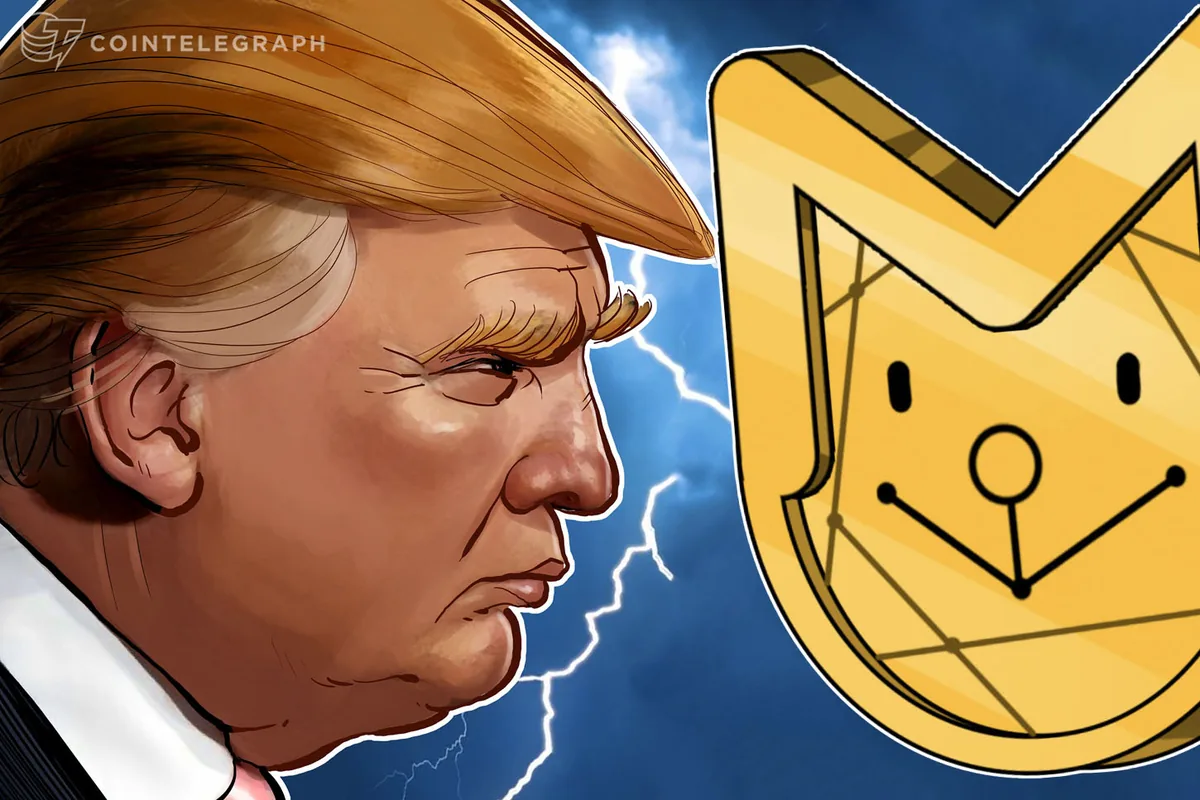
Source: Cointelegraph

Keep exploring

Related stories

A7A5’s Reported Trading Volume Draws Scrutiny From Blockchain Analysts

A7A5’s Reported Trading Volume Draws Scrutiny From Blockchain Analysts

Sanctioned ruble-backed stablecoin A7A5 says it averages $205 million in daily trading volume, but blockchain analytics firms report substantially lower activity and signs of circular transactions.

Read
Zcash Ironwood Upgrade Advances as Developers Report No New Major Bugs

Zcash Ironwood Upgrade Advances as Developers Report No New Major Bugs

Zcash developers said security testing has not uncovered any new serious bugs as the Ironwood upgrade approaches testnet activation. The update comes as the project works to rebuild confidence after a sharp ZEC price drop.

Read
ESMA says many prediction market contracts may already be banned for EU retail investors

ESMA says many prediction market contracts may already be banned for EU retail investors

The European Securities and Markets Authority said companies cannot sidestep EU financial rules by labeling binary-style products as event contracts instead of derivatives. The warning puts prediction market offerings aimed at retail users under closer regulatory scrutiny.

Read