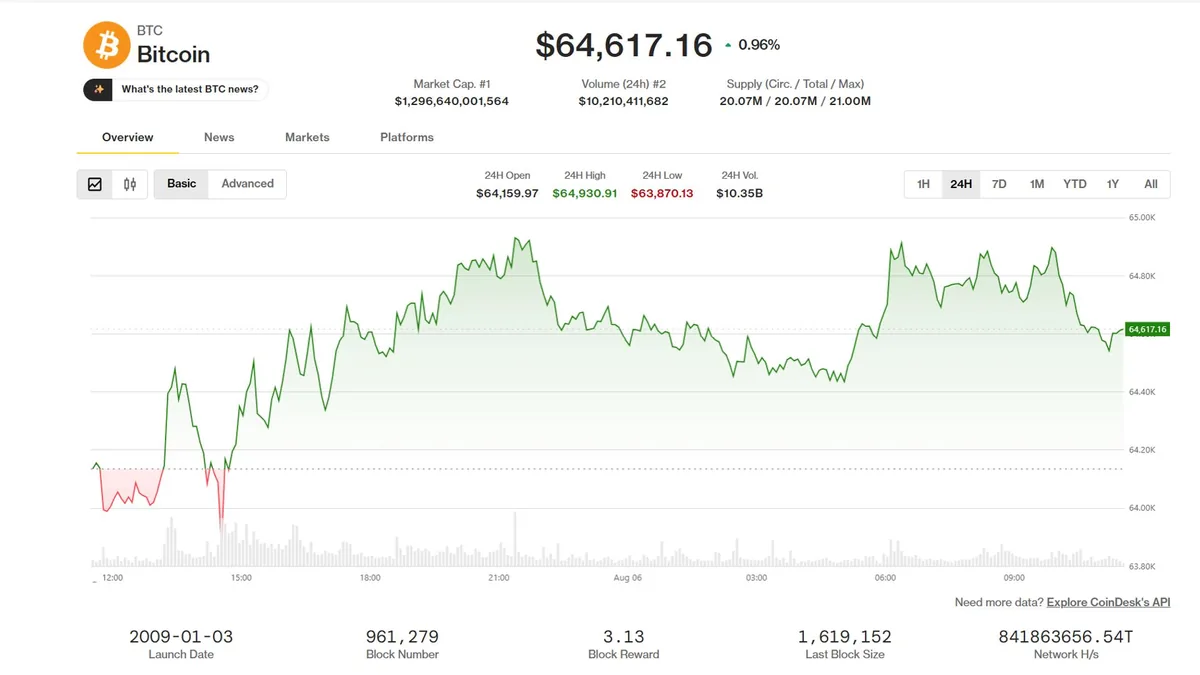
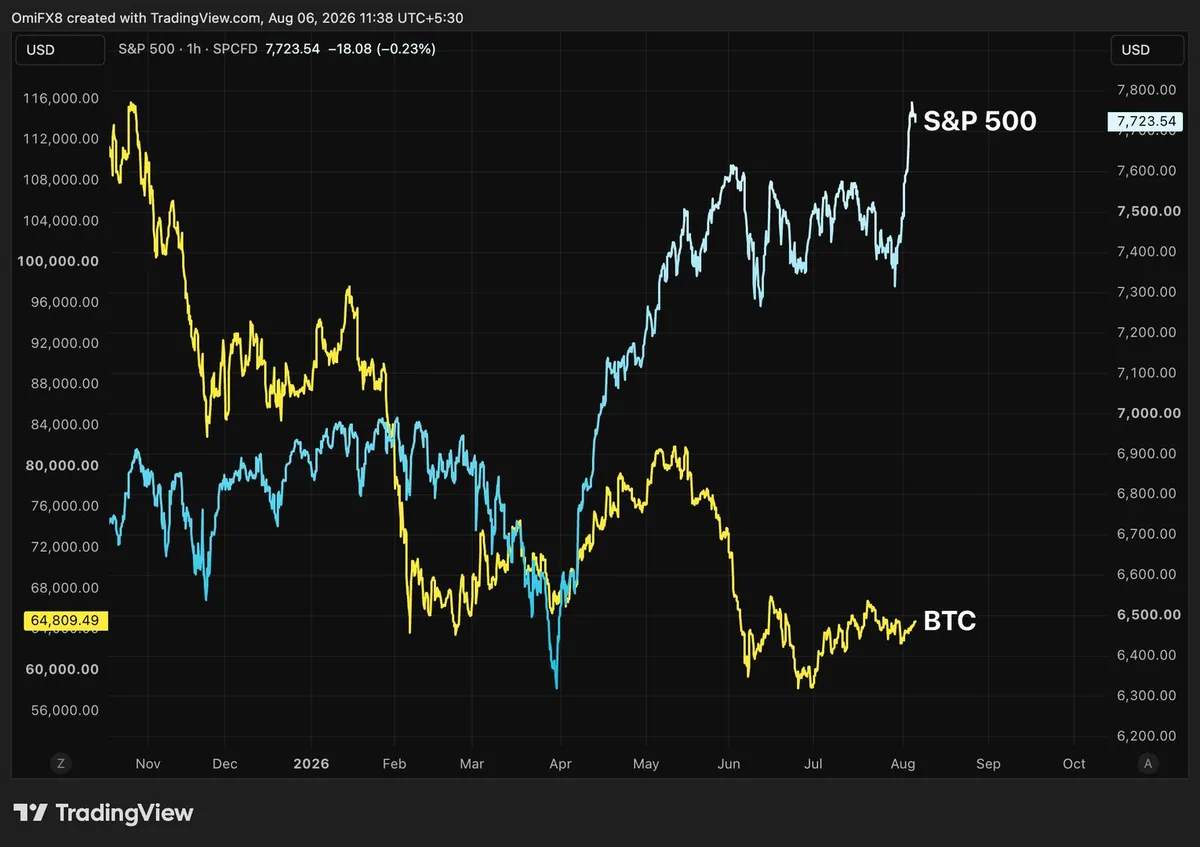
Bitcoin and ether were the only members of the CoinDesk 20 index in positive territory as traders moved toward the perceived safety of the crypto market’s largest assets. Bitcoin rose about 0.9% over 24 hours to $64,700, while the broader CoinDesk 20 gained just 0.16%, according to CoinDesk.
The move matters because it shows a sharper split inside crypto rather than a broad risk-on rally. Bitcoin has gained roughly 8% over the past month while altcoin open interest has fallen about 15%, according to Zaheer Ebtikar, chief strategy officer at crypto neobank Plasma, cited by CoinDesk. That suggests traders are becoming more selective and less willing to take exposure to smaller tokens without stronger momentum from bitcoin.
Ebtikar said bitcoin’s deeper integration into capital markets, including ETFs, basis trading, institutional hedging and collateral use, has given it flows that do not depend only on short-term price rallies. Many altcoins, by contrast, have not made the same transition and remain under pressure when investors question how token value accrues during weaker market conditions.
Derivatives positioning was mixed but leaned more constructive for bitcoin. CoinDesk reported that the long-short taker volume ratio for crypto futures turned bullish for the first time in at least a week, with longs representing nearly 52%. Bitcoin futures open interest also rose to 770,000 BTC, though the report noted that similar increases since early June have often faded quickly.
Other major tokens showed signs of strain. XRP open interest rose 5% over 24 hours while its price fell to $1.04, a combination CoinDesk described as confirming market weakness. Solana futures open interest continued to decline, while ether’s open interest remained below 14 million ETH and showed little change.
The report also highlighted NEAR’s new stake-to-compute model, which connects token staking to AI computing resources. Analysts cited by CoinDesk said the model could give the token a clearer economic function, but its durability depends on whether developers keep using and paying for compute once early incentives and subsidies decline.