Bitcoin Sell Pressure Nears Exhaustion After $4B USDT Market-Cap Drop, CryptoQuant Says

CryptoQuant analysis suggested Bitcoin sell pressure may be closer to exhaustion after USDT’s market capitalization fell by $4 billion over 60 days. The reported contraction was described as historically large and a signal that selling pressure may not intensify from here.

Bitcoin Sell Pressure Nears Exhaustion After $4B USDT Market-Cap Drop, CryptoQuant Says

What happened?

CryptoQuant analysis suggested Bitcoin sell pressure may be closer to exhaustion after USDT’s market capitalization fell by $4 billion over 60 days. The reported contraction was described as historically large and a signal that selling pressure may not intensify from here.

Why it matters

Bitcoin sell pressure may be moving closer to exhaustion after a sharp contraction in Tether’s USDT market capitalization, according to analysis cited by Cointelegraph from CryptoQuant. The analysis pointed to a $4 billion decline in USDT’s market cap over a 60-day period, describing the drop as historically large.

Bitcoin sell pressure may be moving closer to exhaustion after a sharp contraction in Tether’s USDT market capitalization, according to analysis cited by Cointelegraph from CryptoQuant. The analysis pointed to a $4 billion decline in USDT’s market cap over a 60-day period, describing the drop as historically large.

The development matters because stablecoin supply is often watched as a market liquidity signal. A sizable decline in USDT’s market capitalization can suggest that capital has left the crypto market or moved out of dollar-pegged tokens, giving traders another data point when assessing whether selling pressure has already been absorbed.

CryptoQuant’s view, as reported, was that the scale of the USDT contraction indicated Bitcoin sell pressure was unlikely to increase further. That does not mean Bitcoin is guaranteed to rise, but it frames the recent market stress as potentially more mature than early-stage.

For readers following Bitcoin market structure, the key point is the relationship between stablecoin liquidity and spot-market behavior. USDT remains one of the most widely used dollar-pegged assets in crypto trading, so changes in its market capitalization can influence how analysts read broader risk appetite.

The analysis adds to ongoing debate about whether Bitcoin’s latest selling phase is losing force. It remains a market signal rather than a prediction, and investors should treat it as one input among broader liquidity, sentiment, and macro conditions.


Source: Cointelegraph

Keep exploring

Related stories

XRP Leads Major Crypto Losses as Clarity Act Vote Moves to September

XRP Leads Major Crypto Losses as Clarity Act Vote Moves to September

Bitcoin held near $64,300 while XRP posted the steepest weekly decline among major tokens after the U.S. Senate left for its August break without voting on the Clarity Act. The delay keeps a key crypto market-structure bill unresolved until at least September.

Read
Bitcoin Chart Setup Points to Possible $76K Move, With Confirmation Still Missing

Bitcoin Chart Setup Points to Possible $76K Move, With Confirmation Still Missing

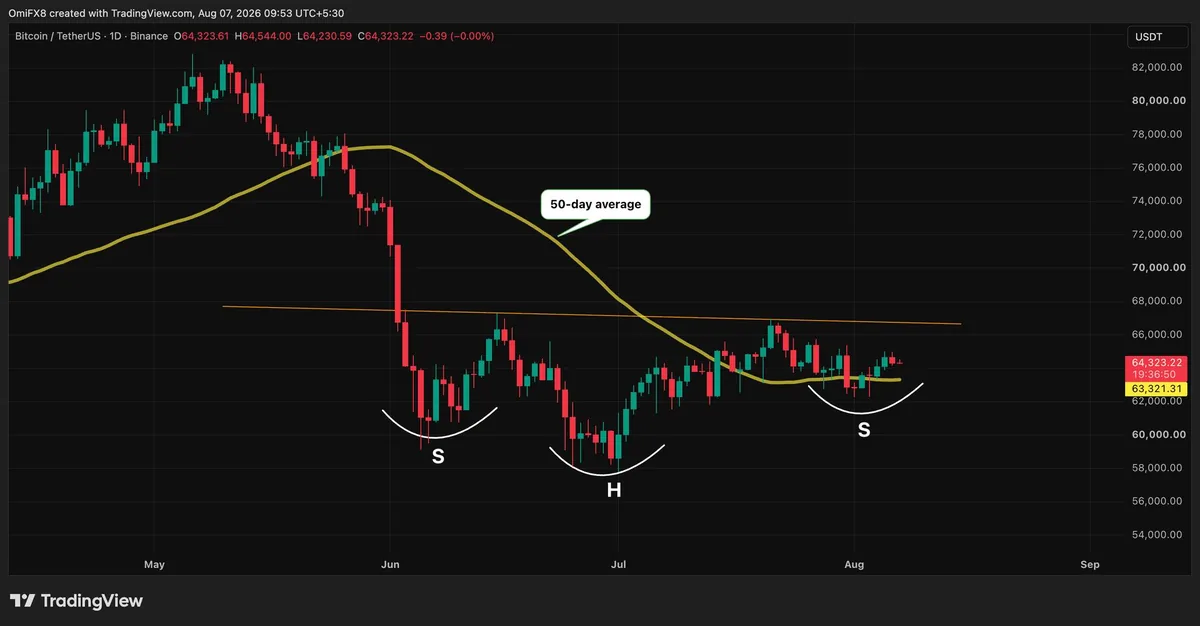
Bitcoin’s daily chart is showing a possible inverse head-and-shoulders pattern that technical analysts associate with bullish reversals. The setup would only be confirmed if BTC breaks decisively above the roughly $66,800 neckline, while weakness below the 50-day average could undermine the case.

Read
Proposed CLARITY Ethics Deal Could Require Trump Crypto Divestment

Proposed CLARITY Ethics Deal Could Require Trump Crypto Divestment

A bipartisan ethics proposal tied to the CLARITY Act would reportedly require Donald Trump to sell crypto-related business interests. Bloomberg reported that the structure could also allow him to defer capital gains taxes on those sales.

Read