Bitcoin Stays Below $65,000 as Geopolitical Risk Keeps Markets Cautious

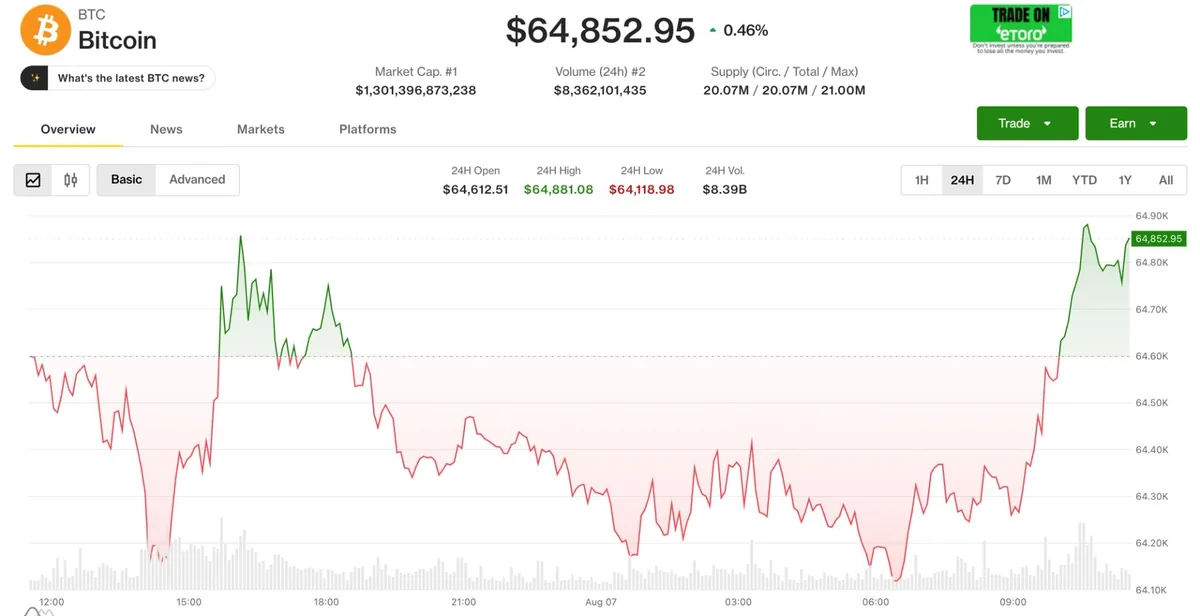
Bitcoin traded near $64,700 on Friday as Middle East tensions, higher oil prices and elevated Treasury yields kept risk appetite muted. The broader crypto market was little changed, while gold gained as investors favored safety.

Bitcoin Stays Below $65,000 as Geopolitical Risk Keeps Markets Cautious

What happened?

Bitcoin traded near $64,700 on Friday as Middle East tensions, higher oil prices and elevated Treasury yields kept risk appetite muted. The broader crypto market was little changed, while gold gained as investors favored safety.

Why it matters

Bitcoin hovered near $64,700 on Friday, staying below the $65,000 mark as escalating Middle East tensions weighed on market sentiment. The broader CoinDesk 20 index slipped 0.2% over the same 24-hour period, according to CoinDesk.

Bitcoin hovered near $64,700 on Friday, staying below the $65,000 mark as escalating Middle East tensions weighed on market sentiment. The broader CoinDesk 20 index slipped 0.2% over the same 24-hour period, according to CoinDesk.

The market backdrop matters because the pressure is not coming from crypto alone. Brent crude rose above $83 a barrel after Yemen’s Iran-linked Houthis attacked Saudi Arabia, adding to regional tensions. If higher oil prices persist, they could add to inflation pressure, while elevated Treasury yields may keep financial conditions tight.

Those macro forces can complicate the outlook for bitcoin and other risk assets. The 10-year U.S. Treasury yield remained at 4.67% after a slight pullback, a level CoinDesk noted has drawn concern from macro analysts. In contrast, gold continued to recover, rising 1.5% to $4,300 per ounce as investors moved toward safer assets amid uncertainty.

Crypto derivatives data also pointed to a more cautious tone. The futures market’s long-short taker ratio returned to neutral after leaning bullish the previous day, while cumulative volume delta readings were negative for most major tokens except ADA, HBAR and ETH. Bitcoin implied volatility remained near a long-held floor, suggesting options markets were not showing major stress.

Elsewhere in digital assets, Sui drew attention for adding optional quantum-resistant security features to accounts. The upgrade uses two post-quantum signature schemes approved by NIST and is designed to let users adopt quantum-safe keys without creating a new seed phrase or moving funds to a new address.

Source: CoinDesk

Keep exploring

Related stories

XRP Leads Major Crypto Losses as Clarity Act Vote Moves to September

XRP Leads Major Crypto Losses as Clarity Act Vote Moves to September

Bitcoin held near $64,300 while XRP posted the steepest weekly decline among major tokens after the U.S. Senate left for its August break without voting on the Clarity Act. The delay keeps a key crypto market-structure bill unresolved until at least September.

Read
Bitcoin Chart Setup Points to Possible $76K Move, With Confirmation Still Missing

Bitcoin Chart Setup Points to Possible $76K Move, With Confirmation Still Missing

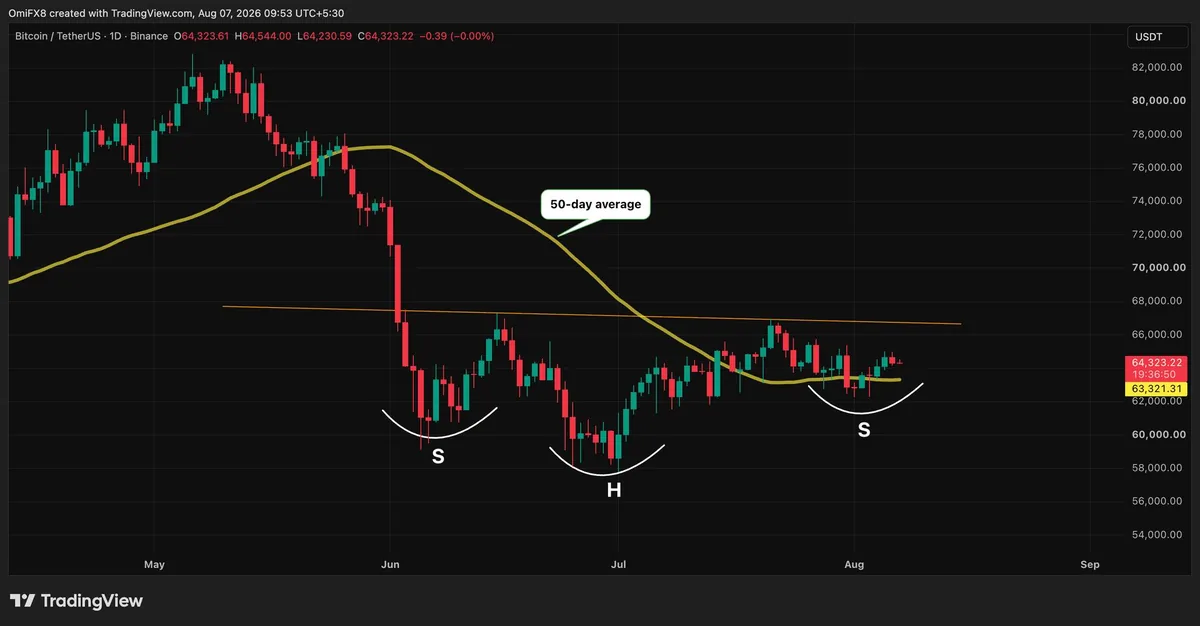
Bitcoin’s daily chart is showing a possible inverse head-and-shoulders pattern that technical analysts associate with bullish reversals. The setup would only be confirmed if BTC breaks decisively above the roughly $66,800 neckline, while weakness below the 50-day average could undermine the case.

Read
Proposed CLARITY Ethics Deal Could Require Trump Crypto Divestment

Proposed CLARITY Ethics Deal Could Require Trump Crypto Divestment

A bipartisan ethics proposal tied to the CLARITY Act would reportedly require Donald Trump to sell crypto-related business interests. Bloomberg reported that the structure could also allow him to defer capital gains taxes on those sales.

Read