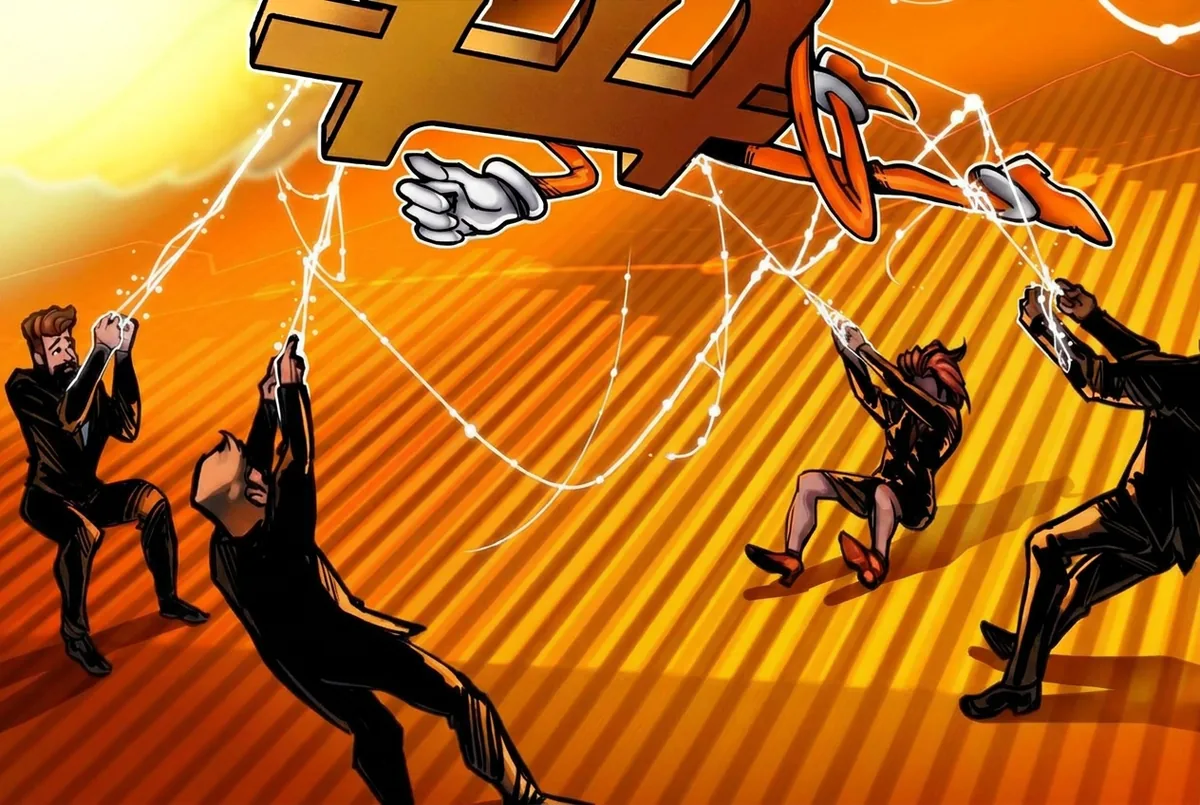
Bitcoin’s $58K Drop Fits Power-Law Cycle Lows, but Futures Signal More Pressure

Bitcoin’s move down to $58,000 is being framed as consistent with cycle-low behavior under the BTC power-law model. The source also notes that futures market data still points to the possibility of deeper price weakness.

Bitcoin’s $58K Drop Fits Power-Law Cycle Lows, but Futures Signal More Pressure

What happened?

Bitcoin’s move down to $58,000 is being framed as consistent with cycle-low behavior under the BTC power-law model. The source also notes that futures market data still points to the possibility of deeper price weakness.

Why it matters

Bitcoin’s latest slide to $58,000 is being described as a move that fits within the Bitcoin power-law model’s view of cycle lows. According to the source, the model frames a decline to that level as “normal” rather than outside Bitcoin’s historical market structure.

Bitcoin’s latest slide to $58,000 is being described as a move that fits within the Bitcoin power-law model’s view of cycle lows. According to the source, the model frames a decline to that level as “normal” rather than outside Bitcoin’s historical market structure.

The development matters because it gives traders and market watchers two competing signals to weigh. On one side, the power-law model suggests the move is still within a long-term pattern; on the other, futures market data cited by the source points to the risk of deeper lows for BTC price.

That contrast highlights the uncertainty around Bitcoin’s near-term market direction. A model-based view can offer context for how far a downturn may extend within historical norms, while derivatives data can reflect positioning and pressure in active markets.

For readers following Bitcoin, the key takeaway is not that $58,000 marks a guaranteed floor, but that some analysts view the level as consistent with prior cycle behavior. At the same time, the futures market signal suggests caution around assuming the correction has fully played out.

Bitcoin may therefore remain under pressure even as long-term models frame the move as ordinary. The source material supports a market picture where BTC’s decline is notable, but not necessarily unusual within the power-law cycle framework.


Source: Cointelegraph

Keep exploring

Related stories

BIP-110 Stalls as CLARITY Vote Is Delayed to September

BIP-110 Stalls as CLARITY Vote Is Delayed to September

BIP-110 effectively ended after producing a short two-block chain, while the CLARITY bill is now headed for a Senate vote in September. The development keeps regulatory attention on crypto policy, even as the bill’s chances appear uncertain.

Read
Bitcoin Anti-Spam Fork Stalls After Mining Only Two Blocks

Bitcoin Anti-Spam Fork Stalls After Mining Only Two Blocks

A Bitcoin breakaway chain pitched as an anti-spam fork quickly lost momentum, mining just two blocks before activity slowed to a crawl. The chain reportedly attracted only 2.53% of mining support, leaving it far behind the main network.

Read
BIP-110 Bitcoin branch stalls after two blocks as miner support remains limited

BIP-110 Bitcoin branch stalls after two blocks as miner support remains limited

A Bitcoin branch enforcing BIP-110 has stalled after producing just two blocks, with the network still operating at full mining difficulty. The mandatory signaling process continues despite limited hashpower support.

Read