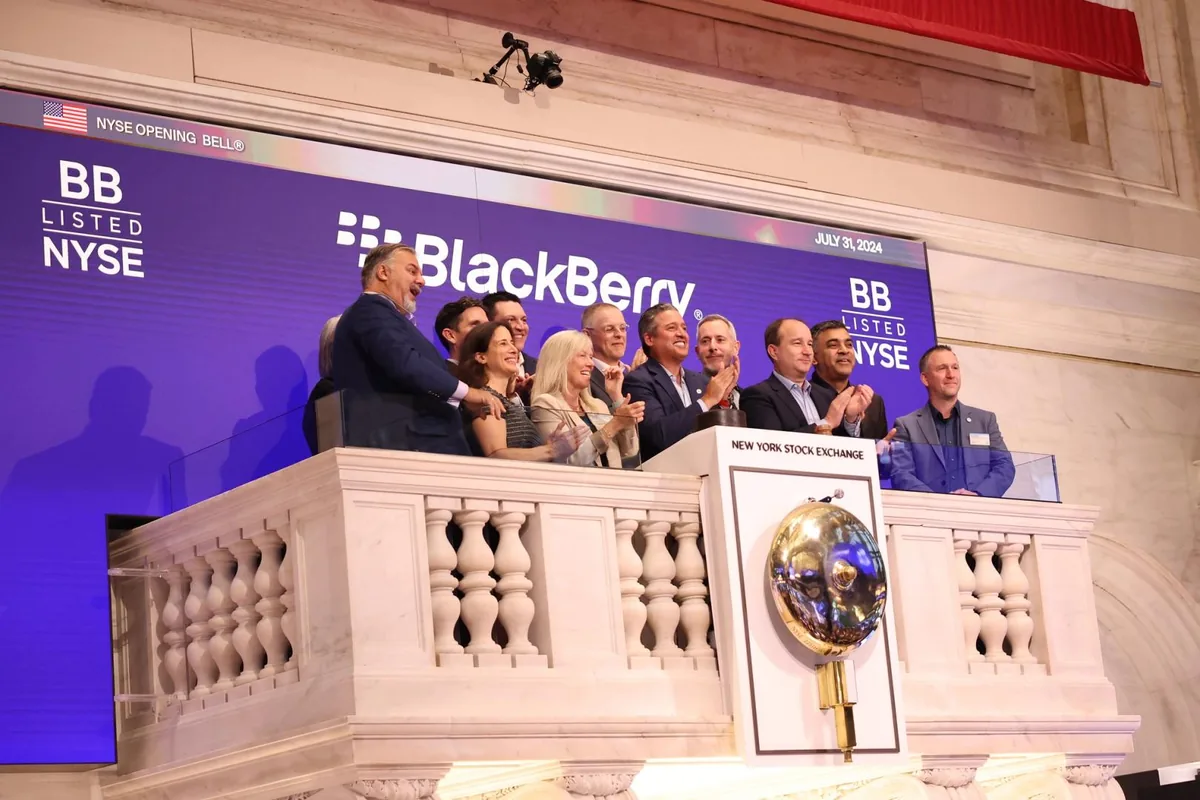
BlackBerry, once best known for keyboard-equipped mobile phones, is drawing fresh market attention as a software company tied to AI and robotics. According to CoinDesk, the company’s shares surged nearly 23% on Thursday after it beat earnings expectations and raised guidance.
The move matters because investors are increasingly looking beyond chipmakers for companies that may benefit from the growth of artificial intelligence. BlackBerry’s current story centers on QNX, an operating system used in mission-critical environments where reliability, security and real-time performance are central requirements.
CoinDesk described QNX as part of the “physical AI” stack, supporting autonomous machines such as smart cars and warehouse robots. The report said major chipmakers including Nvidia and AMD use the software as they build systems for these markets.
Chief Executive John Giamatteo said on the company’s earnings call that safety, security, reliability and deterministic performance become more important as intelligent machines operate more autonomously around people. He argued that QNX’s deterministic and safety-certified design is a key reason customers trust it for systems where failure is not acceptable.
The article also linked BlackBerry’s new software identity to its older reputation for secure communications. CoinDesk noted that the company’s encryption background relied on cryptographic principles also used in modern cryptocurrency, while emphasizing that BlackBerry applied that math for a different purpose. For crypto readers, the connection is less about tokens and more about how cryptography, security and infrastructure are becoming part of the broader AI market narrative.