CASHCAT, the cat-themed memecoin on Robinhood Chain, climbed 120% over the past week, according to CoinDesk, trading near 8.7 cents with a market capitalization of about $86 million and roughly $9 million in daily volume. The token is still far below its mid-July high of around 22 cents, but it has regained attention after a sharp cooling in the chain’s early token-launch rush.
The rebound matters because it is happening alongside continued growth in Robinhood Chain’s core liquidity metrics. Total value locked on the chain reached $774 million, up 20% over seven days, while stablecoins on the network totaled $575 million, up 14% from the prior week. Lending accounted for 43% of TVL and asset management for 41.5%, with Morpho and Ethena together holding nearly three-quarters of the total.
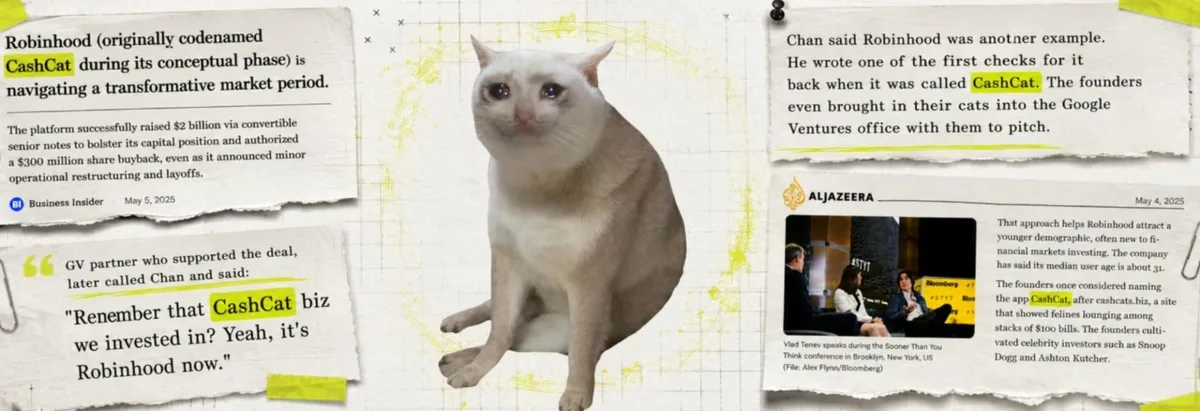
CASHCAT emerged from the chain’s early meme activity rather than from Robinhood itself. CoinDesk reported that the token was built by outsiders around the cash-cat logo used before Robinhood rebranded, and that the project’s own site describes it as “fan fiction with a ticker.” It became an early breakout asset after Robinhood Chain’s July 1 mainnet launch, even as Robinhood’s stated focus for the chain centered on tokenized assets.
That early launchpad wave has since thinned. Noxa, the launchpad behind much of the July activity, stopped accepting launches on July 11 and went dark two days later after earning an estimated $12 million in fees. Token deployments across the chain’s launchpads have fallen from roughly 35,000 per day in mid-July to about 10,000, according to data cited by CoinDesk.
CASHCAT’s holder base has broadened, with DEXTools data cited by CoinDesk showing about 41,200 holders and the full 989 million token supply in circulation. Its Uniswap pool remains the largest single holder at 2.47% and still represents the deepest memecoin liquidity pool on Robinhood Chain.
Robinhood is covering gas fees through roughly late September, making that period an important checkpoint for the chain’s activity. Once users begin paying transaction costs directly, markets will get a clearer view of whether the current TVL, stablecoin balances and token activity reflect durable demand or subsidized early usage.