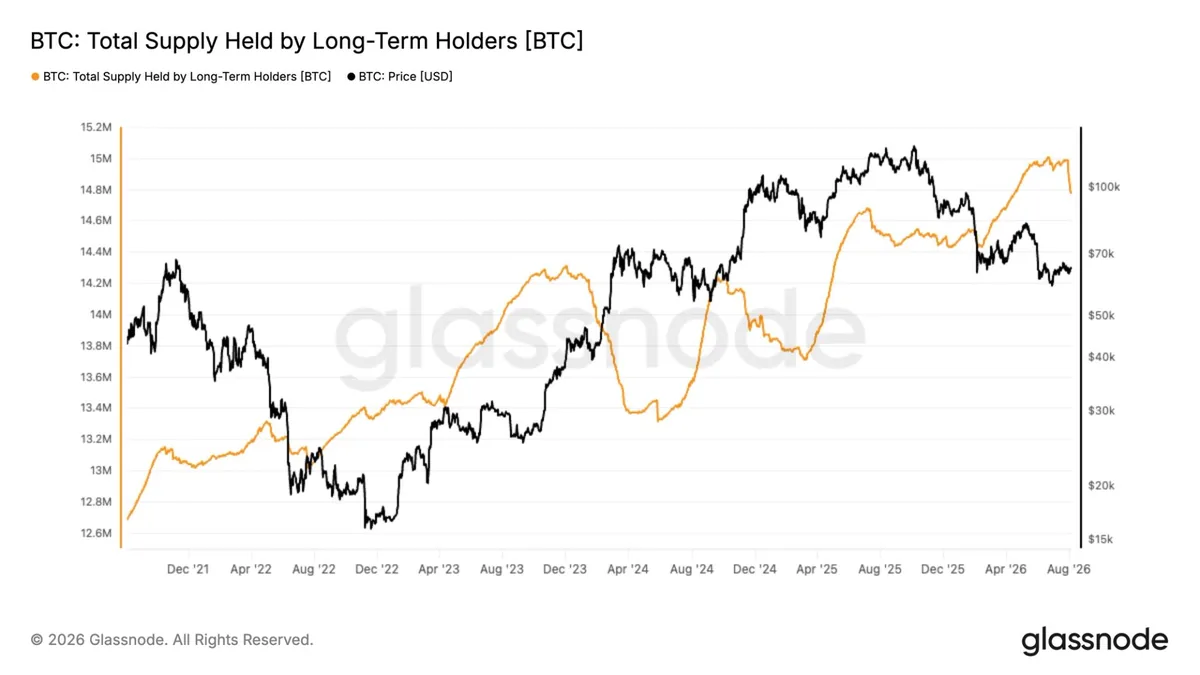
The fallout from the Coldcard security breach is now visible on-chain, with roughly 210,000 bitcoin leaving long-term holder wallets over the past week, according to CoinDesk, citing Glassnode data. Long-term holder supply fell from just under 15 million BTC to about 14.7 million BTC, marking the largest drop since December 2024.
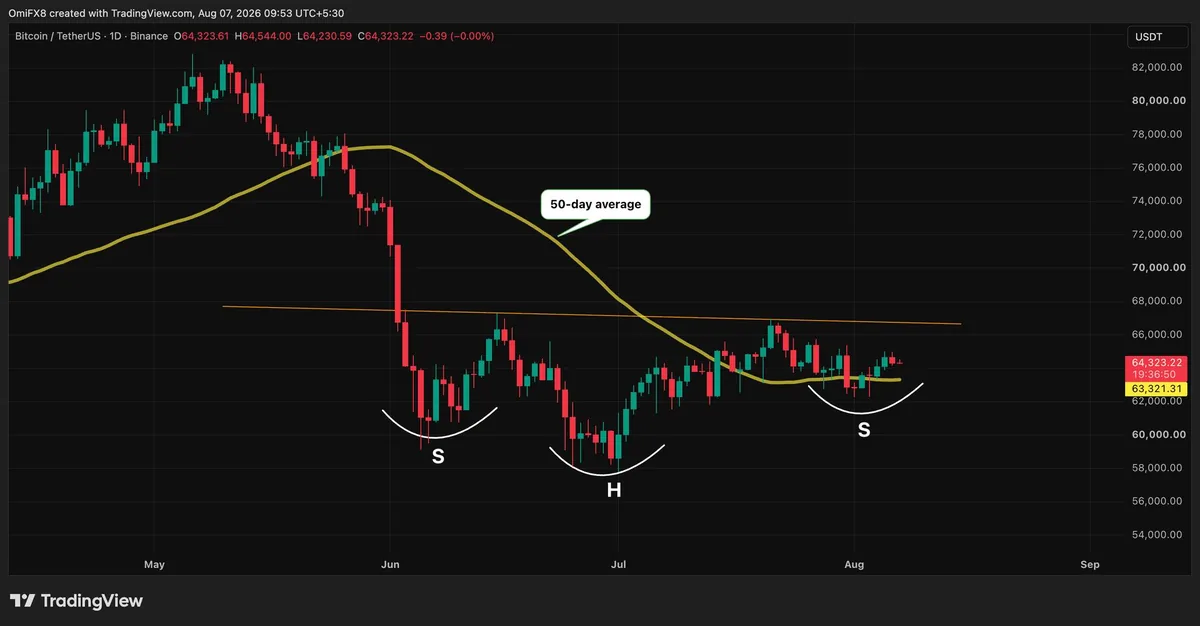
The move matters because large outflows from long-dormant wallets are often watched as a market signal. Historically, heavy spending by long-term holders has appeared near periods of market strength, including around peaks in March 2021, March 2024 and December 2024. This episode looks different: CoinDesk reported that bitcoin was trading around $64,000, roughly 50% below its October all-time high, making profit-taking a less obvious explanation.
Glassnode defines long-term holders as entities whose coins have been dormant for about 155 days or more. Because this group is often viewed as experienced and less reactive to short-term volatility, a sharp decline in its supply can draw attention from traders, analysts and custody providers.
The reported movement is linked to the Coldcard incident, which CoinDesk said stemmed from weak randomness in affected firmware. That weakness allegedly allowed attackers to reconstruct some wallet recovery phrases and drain funds. Thousands of addresses were affected, with estimated losses reaching as much as $114 million, and Coldcard urged affected users to create new wallets and move funds because a firmware update alone could not protect keys that may already have been exposed.
As a result, the decline in long-term holder supply may reflect users transferring bitcoin into newly generated wallets, regulated custody services or spot bitcoin ETFs rather than abandoning bitcoin exposure. CoinDesk noted that U.S. spot bitcoin ETFs attracted about $754 million in inflows over the same week, with BlackRock’s IBIT accounting for most of that amount. The key takeaway is that on-chain movement does not always equal selling, especially when security concerns force holders to rethink custody.