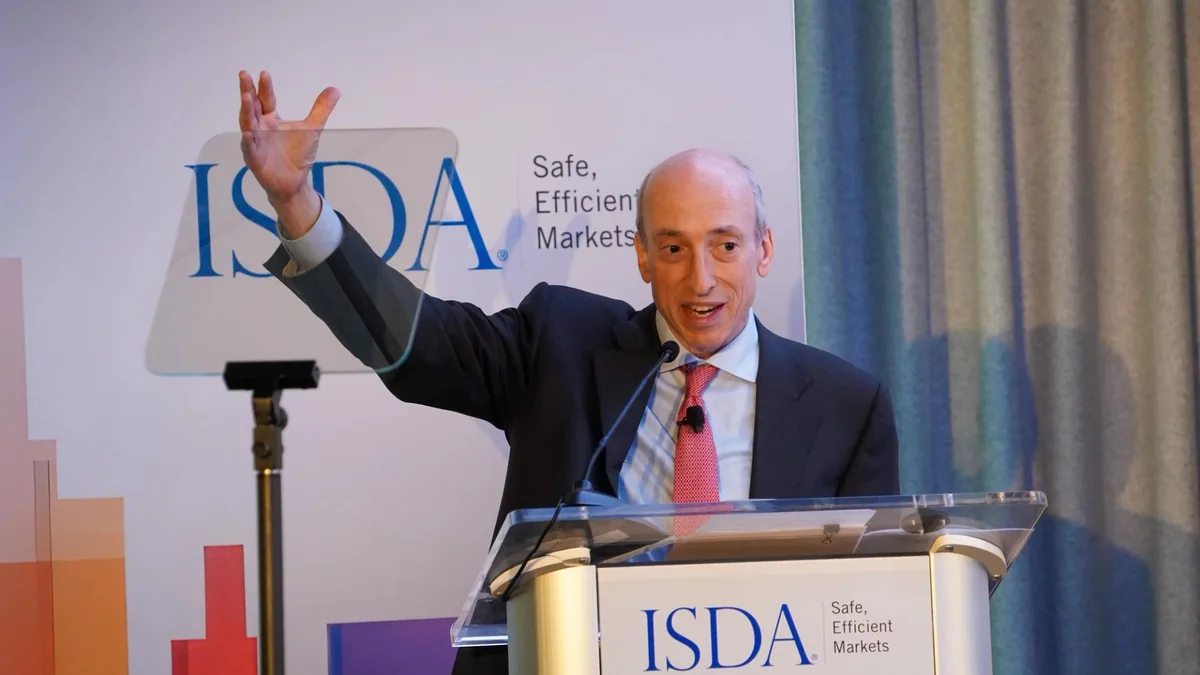
Former SEC and CFTC Chair Gary Gensler filed an amicus brief with the Sixth Circuit Court of Appeals arguing that federal commodities law does not give the CFTC authority to broadly oversee sports-related prediction markets in a way that displaces state gambling regulation. His filing came in a case involving Kalshi, which sued Ohio in an effort to block the state from taking action against its sports event contracts.
The dispute matters because it could shape how prediction market companies operate across the U.S. If courts side with the CFTC’s broader view, federally regulated platforms may have more room to offer sports event contracts nationwide. If states prevail, companies may need state-by-state gaming approvals and could face penalties where they operate without registration.
Gensler argued that Congress did not define sports betting contracts as swaps under Dodd-Frank, the post-financial-crisis law he helped implement while leading the CFTC from 2009 to 2014. His brief said the statutory framework was focused on derivatives used to hedge economic risk, while sports bets rarely serve that purpose.
Several other groups filed friend-of-the-court briefs taking similar positions, including the Indian Gaming Association, Native American tribal organizations, the American Gaming Association and Better Markets. Their arguments focused on state gaming rules, tribal sovereignty and the claim that sports prediction markets are functionally similar to sports betting.
The CFTC, now chaired by Mike Selig, has taken the opposite position in the case, arguing that event contracts listed by a designated contract market fall within federal swap oversight. Courts have so far split on related disputes, with one appeals court ruling in favor of prediction market providers in New Jersey while another appeared more receptive to state arguments. CoinDesk reported that the issue is likely to reach the Supreme Court, while Congress has also shown interest.